


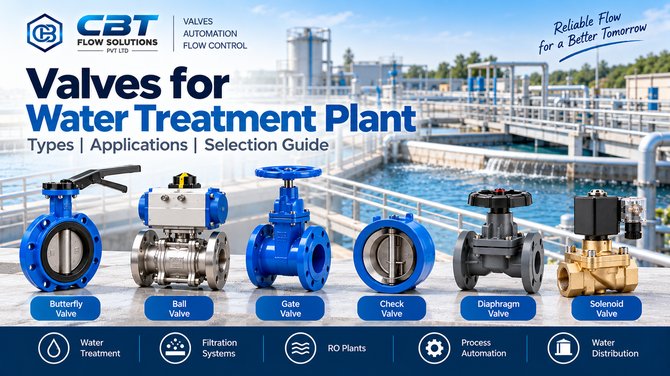
Valves for Water Treatment Plant: Types, Applications and Selection Guide
Water treatment plants depend on a series of connected processes to remove unwanted particles, manage chemicals, filter water and prepare it for its intended use. Throughout these processes, water must move through pipelines, pumps, storage tanks, filters and treatment equipment.
Controlling this movement requires the right valves.
Valves for water treatment plants are used to isolate pipelines, regulate flow, prevent backflow, control chemical dosing and automate different stages of the treatment process. The correct valve helps operators manage water movement safely and maintain the required operating conditions.
However, not every valve is suitable for every stage of water treatment. A valve used on a large raw-water pipeline may have very different requirements from a valve used for chemical dosing or a reverse osmosis system.
Material, pressure rating, flow capacity, connection type, operating method and water quality requirements all influence the selection.
CBT Flow Solutions Pvt. Ltd. supplies a range of industrial valves and flow-control products, including butterfly valves, ball valves, check valves, diaphragm valves and solenoid valves for relevant industrial applications.
This guide explains the main types of valves used in water treatment plants, where they are installed and what to consider before selecting them.
Why Are Valves Important in Water Treatment Plants?
A water treatment plant may contain several treatment stages, and each stage requires control over the movement of water or other fluids.
For example, raw water may first enter the plant through an intake pipeline. It may then pass through screening, filtration, chemical dosing, membrane treatment or other processes before moving to a storage tank or distribution network.
Valves help control these operations.
Their main functions include:
- Starting and stopping water flow through pipelines.
- Isolating pumps, filters and other equipment during maintenance.
- Preventing reverse flow in pumping systems.
- Controlling water distribution between treatment stages.
- Managing chemical dosing and other auxiliary systems.
- Supporting automatic operation through actuators and control systems.
The type of valve required depends on the function it needs to perform. A valve designed for basic isolation, for example, may not be the right choice for precise flow regulation.
Types of Valves Used in Water Treatment Plants
Several valve types are commonly used in water and wastewater treatment facilities. Understanding their differences makes it easier to select the right product.
1. Butterfly Valve
A butterfly valve uses a rotating disc to control flow through a pipeline. The disc turns approximately 90 degrees between its open and closed positions.
Butterfly valves are commonly considered for large water pipelines because they provide a compact arrangement and can be operated manually or with an actuator, depending on the model.
Typical applications include:
- Raw-water intake and transfer lines.
- Filter inlet and outlet pipelines.
- Water distribution systems.
- Cooling-water circuits.
- Wastewater treatment lines.
- Automated isolation systems.
The appropriate body, disc, shaft and seat materials depend on the water quality, operating pressure, temperature and other service conditions.
CBT Flow Solutions lists the BFV-4029A butterfly valve, a flanged, metal-seated design available in sizes from 50 mm to 600 mm. Its listed applications include water treatment and reverse osmosis systems, subject to the product’s specifications.
For a broader selection, visit the Zoloto product range, which includes different butterfly valve configurations.
2. Ball Valve
A ball valve uses a rotating ball with a passage through its centre. When the passage aligns with the pipeline, water can flow through. A quarter-turn closes the passage and stops the flow.
Ball valves are often used where quick on-off operation is needed.
In a water treatment plant, they may be considered for:
- Utility water lines.
- Equipment isolation.
- Small pipeline connections.
- Chemical and auxiliary systems, where the materials are compatible.
- Automated on-off control.
The valve material and seat design must match the process. A valve suitable for ordinary utility water may not be appropriate for every chemical-dosing application.
CBT supplies automated ball valves for relevant water treatment applications. Its 2390F pneumatic-actuated ball valve is listed for water, air, oil, gas and other specified media, including water treatment and RO plants.
For electrically operated applications, see the 2590F EA electric-actuated ball valve.
3. Gate Valve
A gate valve uses a movable gate or wedge to open or close the flow passage.
It is primarily intended for isolation. In the fully open position, the gate moves away from the main flow path. When closed, it blocks the passage.
Gate valves may be considered for suitable water supply, utility and industrial pipeline applications where reliable isolation is required.
However, they are generally not the preferred option for continuous throttling because partial opening can cause wear or damage, depending on the design and operating conditions.
When choosing a gate valve, check the pressure rating, body material, end connection, size and applicable standards.
CBT’s Zoloto range includes sluice and gate valve products. For industrial process applications, the company also lists a cast steel gate valve.
The required construction depends on the pipeline and service conditions.
4. Check Valve or Non-Return Valve
A check valve, also called a non-return valve, allows flow in one direction and helps prevent reverse flow.
This is especially important in pumping systems.
When a pump stops, water in the discharge pipeline may attempt to flow backwards. A suitable check valve can help protect the system from reverse flow and reduce the risk of problems associated with pump reversal or backflow.
Common applications include:
- Pump discharge pipelines.
- Water transfer systems.
- Booster pumping stations.
- Water distribution networks.
- Wastewater treatment systems.
The choice of check valve depends on flow rate, pressure, installation orientation, closure characteristics and the potential for water hammer.
CBT supplies wafer check valves for applications including water and wastewater treatment plants. These compact valves fit between pipeline flanges and are used to prevent reverse flow.
For other non-return valve options, you can also review CBT’s non-return valves.
5. Diaphragm Valve
A diaphragm valve uses a flexible diaphragm to control flow through the valve body.
The diaphragm separates the operating mechanism from the process fluid, depending on the design. This makes diaphragm valves useful in selected applications where fluid compatibility, isolation or the handling of certain process media is important.
They may be considered for chemical dosing, treatment chemicals and other services where the selected diaphragm, lining and body materials are suitable.
CBT’s diaphragm valve range includes weir-type designs for demanding applications, including water treatment. The listed options include different body materials, linings and diaphragm materials.
Before selecting a diaphragm valve, confirm chemical compatibility, operating pressure, temperature and whether the valve is intended for isolation or throttling.
6. Solenoid Valve
A solenoid valve is operated electrically. An electromagnetic coil moves an internal mechanism to open, close or redirect flow.
These valves are commonly used in smaller control circuits and automated systems rather than as a universal replacement for large pipeline valves.
Applications can include:
- Chemical dosing control.
- Water inlet and outlet control.
- RO system auxiliary circuits.
- Automated bypass systems.
- Filter backwash control, where compatible with the design.
- Instrumentation and process-control equipment.
The correct valve depends on the flow requirement, pressure range, fluid compatibility, coil voltage, port configuration and control logic.
CBT’s solenoid valve range includes products listed for water treatment applications, including dosing and RO-related control duties.
For example, its 9210B / 9220B 2/2-way solenoid valve is listed for water among other specified media and applications including water treatment plants. Check the product’s stated pressure, temperature and material specifications before use.
Where Are Valves Installed in a Water Treatment Plant?
The treatment process determines which valve types are needed at different points.
Raw Water Intake
At the intake stage, water enters the facility from a reservoir, river, borewell or another source.
Valves may be required to isolate pipelines and equipment for maintenance. The valve size, pressure rating and construction must match the intake arrangement.
Filtration Systems
Filtration systems may include media filters, cartridge filters or other filtration equipment.
Valves are used to direct water through the required flow path and isolate filters when maintenance is necessary.
In systems that use automated filter backwashing, suitable valves may be operated in a sequence to control forward flow, backwash flow and drainage.
Chemical Dosing
Treatment chemicals may be added to adjust pH, assist coagulation, support disinfection or perform other treatment functions.
The valves used in these circuits must be compatible with the chemical concentration and operating conditions. Material selection is particularly important because the wrong seal or body material can lead to leakage or premature failure.
Reverse Osmosis Systems
Reverse osmosis plants use membranes to separate dissolved substances from water.
Valves may be required at the inlet, concentrate outlet, permeate line and auxiliary circuits. The selection depends on the pressure, flow and control requirements of the particular installation.
CBT lists pneumatic and electric-actuated ball valves for applications that include RO plants. The exact valve rating must match the required operating conditions.
Wastewater Treatment
Wastewater plants handle water that may contain suspended solids, organic matter and other contaminants.
Valve selection should account for the medium, solids content, pressure, cleaning requirements and potential for blockage.
For pump discharge lines, appropriate check valves help prevent reverse flow. Isolation valves are used to separate equipment during maintenance.
Treated Water Storage and Distribution
Once treatment is complete, water may move to a storage tank or distribution network.
Valves help isolate sections of the system, control flow paths and support maintenance operations. For drinking-water systems, the selected valve materials and products must also meet the applicable potable-water requirements.
How to Select the Right Valve for a Water Treatment Plant
Choosing a valve based only on pipe diameter is not enough. Several technical factors should be checked before purchasing.
1. Identify the Medium
Confirm whether the valve will handle raw water, treated water, wastewater, seawater, chemical solution or another medium.
The medium determines important material and design requirements.
2. Check Operating Pressure
Identify both the normal operating pressure and the maximum expected pressure, including relevant transient conditions.
The valve must be rated for the application. Pump discharge and reverse osmosis systems may have very different pressure requirements from ordinary water distribution lines.
3. Consider Flow Rate and Valve Size
The valve must pass the required flow without creating an unacceptable pressure drop.
Sizing should consider the pipeline, flow rate, pressure conditions and the intended valve function. Oversizing or undersizing can affect control and system performance.
4. Select the Right Material
Body, disc, ball, seat, diaphragm and seal materials must be compatible with the water quality and any chemicals present.
Seawater, chemical dosing and wastewater may require different material choices. SS304 or SS316 should not be assumed suitable for every water treatment application without checking the service conditions.
5. Check End Connections
Common connection arrangements include flanged and threaded designs, depending on the valve type and size.
The connection must match the piping specification and installation requirements.
6. Decide on Manual or Automated Operation
Manual valves may be suitable for infrequent isolation.
Automated valves are useful when a control system needs to switch flow paths, run a backwash sequence or operate valves remotely.
Automation selection should consider the actuator type, operating torque, control signal, available utilities and required feedback.
7. Consider Maintenance and Spare Parts
A valve should be practical to inspect and maintain.
Before purchasing, check whether replacement seats, seals or other service parts are available and whether the design permits maintenance without unnecessary disruption.
8. Verify Applicable Standards and Approvals
Water treatment applications can have specific engineering and regulatory requirements.
For drinking-water service, verify the applicable potable-water approvals and material requirements rather than assuming that a general industrial valve is certified for drinking water.
Technical datasheets and project specifications should guide the final decision.
Manual vs Automated Valves in Water Treatment Plants
Manual valves are useful where an operator needs to isolate equipment or change a flow path occasionally.
Automated valves are more appropriate where operations must be performed remotely or according to a programmed sequence.
For example, a water treatment plant may need several valves to open and close during filter backwashing. Automated valves can coordinate these movements when connected to a suitable control system.
CBT Flow Solutions supplies industrial valves and valve-automation components, including pneumatic and electric-actuated ball valves and butterfly valve arrangements.
Explore the pneumatic actuator range for relevant valve automation requirements.
A complete assembly must be selected with the correct valve, actuator, solenoid valve and accessories. Installation and control logic should be checked together.
Common Mistakes When Buying Water Treatment Valves
Several avoidable mistakes can lead to leakage, maintenance problems or unsuitable performance.
Choosing a valve only by size. The valve must also meet the pressure, flow and material requirements.
Ignoring chemical compatibility. Treatment chemicals may affect seals, linings and body materials. Check the complete wetted construction.
Using a check valve without considering water hammer. The closure behaviour and system dynamics should be reviewed, particularly in pump discharge applications.
Selecting a valve without defining its function. Isolation, regulation, backflow prevention and automated switching may require different designs.
Assuming every stainless steel valve is suitable for drinking water. Potable-water requirements and approvals must be checked separately.
Ignoring maintenance access. The valve should be installed in a way that allows required inspection and servicing.
A clear specification helps the supplier recommend an appropriate valve instead of relying on assumptions.
Valves for Water Treatment Plant: Why Choose CBT Flow Solutions?
CBT Flow Solutions Pvt. Ltd. supplies industrial valves, actuators, solenoid valves and related flow-control products.
Its website lists butterfly valves, ball valves, gate valves, check valves, diaphragm valves and other products used in relevant water-treatment and industrial applications.
The company was established in 1966 as C.B. Trading Corporation and now operates as CBT Flow Solutions Pvt. Ltd.
For water-treatment projects, the correct product depends on the process stage and technical requirement. Buyers should provide details about the fluid, line size, pressure, flow, temperature, connection type and whether manual or automated operation is required.
Review the Zoloto valve range, automated ball valves, wafer check valves and solenoid valves to explore relevant options.
Frequently Asked Questions
Which valves are commonly used in water treatment plants?
Common valve types include butterfly valves, ball valves, gate valves, check valves, diaphragm valves and solenoid valves. The selection depends on the valve’s function, the water quality, operating pressure, flow rate and treatment stage.
Which valve is suitable for a water treatment plant pipeline?
Butterfly, gate and ball valves may be suitable for different isolation duties. The final selection depends on line size, pressure, connection, flow conditions and the required operating method.
Why are check valves important in water treatment plants?
Check valves help prevent reverse flow. They are commonly installed in suitable pump discharge and water-transfer systems to help protect pumps and maintain the intended flow direction.
Are butterfly valves suitable for water treatment applications?
Yes, suitable butterfly valve designs are commonly used in water and wastewater systems. The valve’s material, seat construction, pressure rating and size must match the application.
Can solenoid valves be used in water treatment plants?
Yes. Solenoid valves can control suitable water lines, dosing circuits and auxiliary systems. Their pressure range, fluid compatibility, port size, voltage and operating conditions must be verified.
What should I consider before buying a valve for a water treatment plant?
Check the medium, pressure, temperature, flow rate, pipe size, body and seal materials, connection, operating method, maintenance needs and any required approvals.
Can water treatment valves be automated?
Yes. Suitable ball and butterfly valves can be fitted with compatible pneumatic or electric actuators. The complete assembly must match the valve torque, control requirements, operating conditions and installation.
Conclusion
Choosing the right valves for a water treatment plant requires an understanding of the entire process.
Butterfly and gate valves can be considered for suitable isolation duties. Ball valves provide quarter-turn operation, check valves help prevent backflow, diaphragm valves can suit selected chemical and solids-handling applications, and solenoid valves support electrical control of compatible circuits.
No single valve type is suitable for every stage of treatment. The choice should always be based on the medium, pressure, flow rate, materials, connection, operating method and applicable standards.
Careful valve selection can help a plant operate reliably, simplify maintenance and reduce the risk of compatibility problems.
Need Industrial Valves for Your Water Treatment Plant?
CBT Flow Solutions Pvt. Ltd. supplies industrial valve, automation and flow-control solutions for a range of applications.
Share your pipeline size, water or process medium, operating pressure, flow requirement and valve function with our team to help identify a suitable product.
CBT Flow Solutions Pvt. Ltd.
Valves | Automation | Flow Control
Reliable Flow for a Better Tomorrow
Explore CBT Valve Products
View Automated Ball Valves
Contact CBT Flow Solutions